
Tina Turner — The Ownership of Fire
Who does a woman belong to once her voice, her name and her body have become part of a business model?
Contents
For me, the most interesting story about Tina Turner begins with a name.
I don’t mean the short dress or the voice that could fill a stadium, and not the images of a woman crossing the stage with seemingly inexhaustible energy either. I mean the question of who the name on the poster was even allowed to belong to.
Anna Mae Bullock became the artist Tina Turner. She was given the name in connection with her work and her relationship with Ike Turner, and after the separation and the divorce finalised in 1978 she kept it. That is quite a remarkable constellation, because the name that had come into being inside a professional and private system shaped by a man became the foundation of a career she continued outside that system.
We like to talk about reinvention as if it meant shedding every trace of the earlier life. But what if the thing you need to take back isn’t anything new? What if it is your own work, your voice, your labour and your name, things you substantially helped build, but whose terms you were never able to decide on as an equal?
Whoever walks out of a burning house normally leaves everything inside. She left and took the fire with her, because it had been hers from the start.
Read this way, Tina Turner’s story is not only that of a woman leaving a violent marriage. It is also a story about who a woman’s life belongs to, materially and symbolically.
And at this point the Sagittarius archetype is considerably more complicated than the familiar line that freedom means finally being able to go. The question is where you go when a substantial part of what you built is tied to the order you have to leave, and how you build a future in which your past no longer decides what you may own, create or become.
I The economics of liberation
In 1976 Turner left her marriage. The road to an independent solo career was not a direct passage from horror to triumph. There followed years of work, financial insecurity and the search for a new place in the music industry, and Private Dancer did not come out until 1984.
Eight years are a rather uncomfortable length for a success story we prefer to tell in three scenes: the woman suffers, the woman leaves, the woman triumphs.
And yet the time between the decision and its later economic confirmation is the part that matters. Freedom has a material side. Having a voice of your own is far from having a contract, a flat, an income or access to the tools you need to lead a self-determined life with that voice.
In the way we judge women, exactly that gets blurred all the time. We ask why someone didn’t leave sooner, as if a decision were the same as the means to carry it out. Later we celebrate the comeback and act as if only the result had justified the liberation.
Honestly, that is bookkeeping. We look at her life like a balance sheet and only approve the decision once there is a plus at the bottom.
Tina Turner was extraordinarily successful. That is a fact of her career and not a moral condition for the right to leave a violent relationship. A woman has to become neither an entrepreneur nor a world star for the loss of her previous life structure to have been justified, and she needs no impressive second career for the first decision to have been allowed to be right.
For HOTU this distinction is central. Women’s autonomy must not become one more achievement whose outcome we have to present to a jury. Otherwise we have merely swapped the old dependence for a new one, and it sounds like this: you are free now, but please prove to us that you invested your freedom profitably.
II The chart Where this fire comes from
Astro-Databank lists Turner’s birth data with a rating of AA: 26 November 1939, 10:10 p.m., Brownsville, Tennessee. The calculation is tropical with Placidus houses, and all the numbers are at the end of this article.
I’ll start with what you could see on every stage. The Ascendant is in Leo, and that is the entrance that walks into a room and owns it afterwards. Only the ruler of that Ascendant, the Sun, is not up in the house of fame at all. It is in Sagittarius, right at the bottom in the fourth house, with the roots and the origins, with what nobody sees.
To me that means: this fire was not lit on stage. It comes from below, from the foundation, and the stage is merely the place where you could see it. That is also why nobody who took the stage from her could take the fire.
And she worked with those origins instead of hiding them. With “Nutbush City Limits” she wrote a song in 1973 about exactly the place she came from and turned it into a hit. With her, the Sun in the fourth house is not a private detail, it is material.
Opposite, in the tenth house of the public, stands the Moon in Gemini. Gemini translates, switches languages and can say the same sentence five ways, and a Moon up there means the public gets the feeling of knowing her.
That is the interpreter. She could take a song someone else had written and sing it so that it was hers afterwards. And she could change genre, from rhythm and blues to rock to pop, without becoming someone else, because the Gemini Moon changes the form and the Sagittarius Sun underneath stays the same.
Between Sun and Moon lies an opposition, and it is the price of this gift. The public voice and the private foundation pull in different directions, and a career can profit from a story that the person behind it doesn’t want to keep telling. You can stand on a stage, be looked at by thousands and still not command the terms of your own visibility.
A woman can be seen without being recognised as a subject in her own right.
III Mars at the apex The engine
Now comes the placement that, for me, explains all that energy. Mars in Pisces in the seventh house squares the Sun, and almost exactly so, by less than one degree. It also squares the Moon and Mercury. That makes Mars the apex of a mutable T-square, and all the tension arising between Sun and Moon converges on it.
A T-square is not an aspect you can sit out. It is a boiler under pressure, and the pressure has to go somewhere. With her it went through the body. Anyone who saw her on stage did not see a woman moving because the choreography says so, but one who would burst if she stood still.
And it is a Mars in Pisces, which matters. An Aries Mars runs at the wall. A Pisces Mars is water under pressure, it finds the way that is open, and its strength is stamina and surrender to the rhythm. That was exactly her stage energy: not an attack, but a current that doesn’t let up for two hours.
That this Mars is in the seventh house, the area of relationship and the other person, also means to me: her energy needs a counterpart to ignite. At first that was a partner. Later it was the audience, and I think that is one of the smartest shifts a person with this placement can make.
One sentence has to stand here, and it stands here once and plainly: this placement explains no violence and attracts none. Responsibility for violence lies with the person who commits it, and no chart in the world changes that.
What the placement describes is her way of acting. A Pisces Mars rarely acts as a grand gesture. It acts through detours, through preparation and through waiting for the moment a door opens, and we like to overlook that because we measure agency by how visible it is. And yet a person who secures access to money, organises support or prepares the next step may be acting far more effectively than someone who makes a spectacular statement.
The quietest preparations are often the bravest, they just don’t look like anything. Nobody photographs a bank account of your own.
IV Venus How energy becomes a brand
Energy alone doesn’t make a career that lasts five decades. For that you need something that gives the energy a form, and with her that sits in Venus.
Venus is in Sagittarius in the fifth house, the house of the stage, of play and of creative expression. This is a Venus that wants to be big, that enjoys its own effect and doesn’t make itself smaller so that others feel comfortable. The body here is instrument and pleasure at once.
And then comes the aspect I consider the most important one in the whole chart where success is concerned: Venus trines Saturn, with a gap of just 17 arc minutes, so almost on the dot. Saturn is form, discipline, repetition and duration.
That means: the wildness was built. What looked like an explosion on stage was rehearsed, placed and repeatable every single night. The legs, the fringe, the mane, the walk, none of that was accidental, it was a signature she held for decades. Venus trine Saturn is the difference between a woman with charisma and a brand.
A fire without a hearth is simply a blaze, after all. The stones around it take nothing away, they make sure it is still hers tomorrow. With her those stones were work, rehearsal and a very precise idea of what Tina Turner looks and sounds like.
Venus also squares Neptune, again almost exactly. Neptune is projection, the image into which others see whatever they want to see. For a woman on stage that is a danger, because she then becomes a fantasy, a role or a commodity and nobody asks any more who is actually standing there.
She turned that danger into a tool. If people want to see an image anyway, then she is the one who decides which. That is the step from being the object of a projection to being the owner of an image, and it only works with Saturn at your back.
Neptune here is in the second house, the house of one’s own worth and one’s own money, and that is where this chart is most vulnerable. Being a desired image is far from having a share in the value of that image. So the feminist question is who gets a say in expression, limits, payment and visibility. It is most certainly not what a woman has to look like for us to let her pass as free.
V Jupiter in Pisces Where she drew her strength from
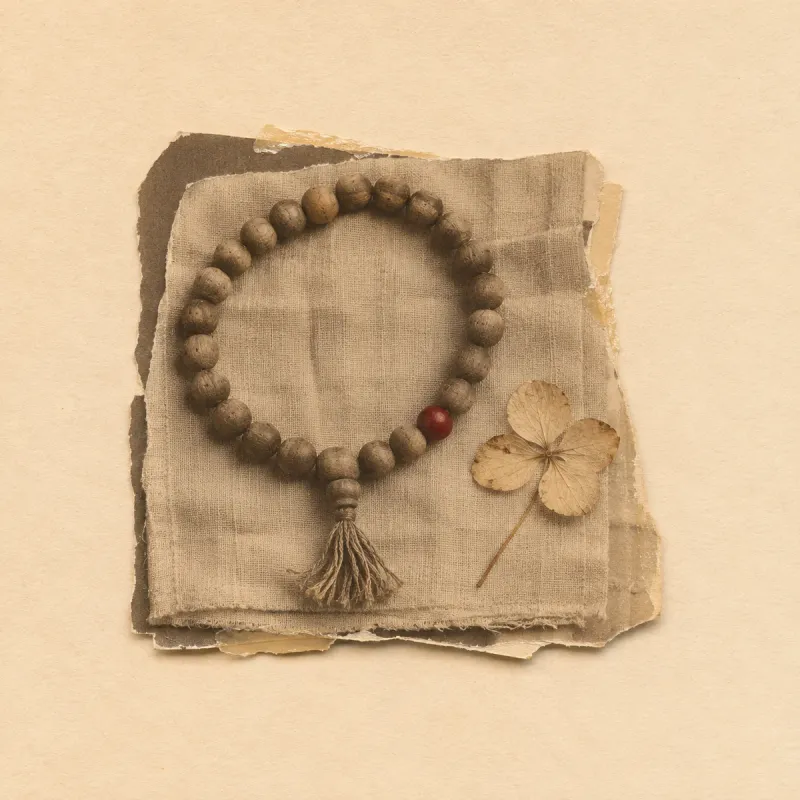
Jupiter rules her Sagittarius Sun, her Mercury and her Venus. If you trace in this chart which planet answers to which, you always end up with it. And it is in Pisces, where it is traditionally at home, which means at full strength.
That means: the whole chart is fed by a strong Jupiter. This is a person with an almost outrageous basic trust that things go on and that life is bigger than the situation you are currently stuck in. I think that is the actual source she drew from, long before anything spoke in its favour.
Jupiter in Pisces is faith in the literal sense. Turner practised Nichiren Buddhism from the early 1970s and spoke at length in interviews and books about how this practice changed the way she looked at her own life. So we don’t have to guess here, we have her own statements.
This Jupiter is in the eighth house, and that is the house of entanglements, of other people’s money, the shared account, contracts and dependencies. It is where what belongs to whom after a separation gets negotiated.
And that is exactly where she made her smartest move. She left with the name. In a house that is about shared property, she took the one piece from which everything else could be built. A strong Jupiter in the eighth house is the ability to recognise the real value in an entanglement and not let go of it.
Jupiter opposes Neptune, and that keeps open a question that belongs to every great hope, namely how to tell vision from illusion. Hope widens what someone considers possible in a given situation. Denial demands no longer looking at the situation itself. Believing in a different future works when it enlarges the ability to decide today, and it turns into consolation for later when it demands that a person keep enduring an unbearable present.
With her it worked. That is a considerably deeper form of Sagittarius hope than the idea that everything will somehow turn out fine. It doesn’t ask you to wait for a better world. It allows you to consider a different world thinkable at all, and then to set off.
One sentence belongs here and must not be missing: spirituality is not a moral duty and no substitute for money, legal protection or support. What helped her doesn’t have to help anyone else.
VI Uranus on the public horizon Who writes the next role?
At the top of the chart, on the cusp of the tenth house, the Midheaven is in Taurus, and near it stands Uranus. Taurus on the Midheaven means the public profession runs through the body, the voice and something tangible and valuable. Uranus beside it means this career does not go by the book.
Uranus in the tenth house breaks the format. It makes careers that, according to the textbook, don’t exist, and it often makes them only at the second attempt.
Hers is in no textbook. When Private Dancer came out in 1984, she was 44. A Black woman filling stadiums as a rock singer in her mid-forties was simply not provided for in this industry, and she kept it up until her farewell tour at the age of 69. That is Uranus on the Midheaven: she did not take the place that existed for her, she built one that hadn’t existed before.
The industry she did this in was shaped, in its access and its recognition, by racist and gendered structures. Her success does not make those structures disappear. Nor should it tempt us to notice the heritage of Black music only once it has become visible through individual superstars.
Uranus is in a tight square to the Leo Ascendant, and that is the friction between the role and the person. Whoever has an image that earns money meets resistance the moment they want to change it, because everyone else has an interest in the familiar continuing. Constancy can give stability and at the same time demand the repetition of an image that no longer fits you.
And this is where the chart closes its circle. Venus, the ruler of that Taurus Midheaven, is the same Venus with the Saturn trine. So her public role hangs on exactly the spot where she has form and discipline. That is why she could change the role without losing the brand: the brand was never the costume, it was the handwriting underneath.
It is not enough that a woman can be reinvented. She must also get a say in who shapes that reinvention.
She had her say. For me that is the core of what you can learn from this chart: she had the fire from the start, Mars as the engine, Jupiter as the source. What she worked for was the hearth, that is, the form, the name and the right to decide for herself what it burns for.
VII The right not to remain the survivor forever
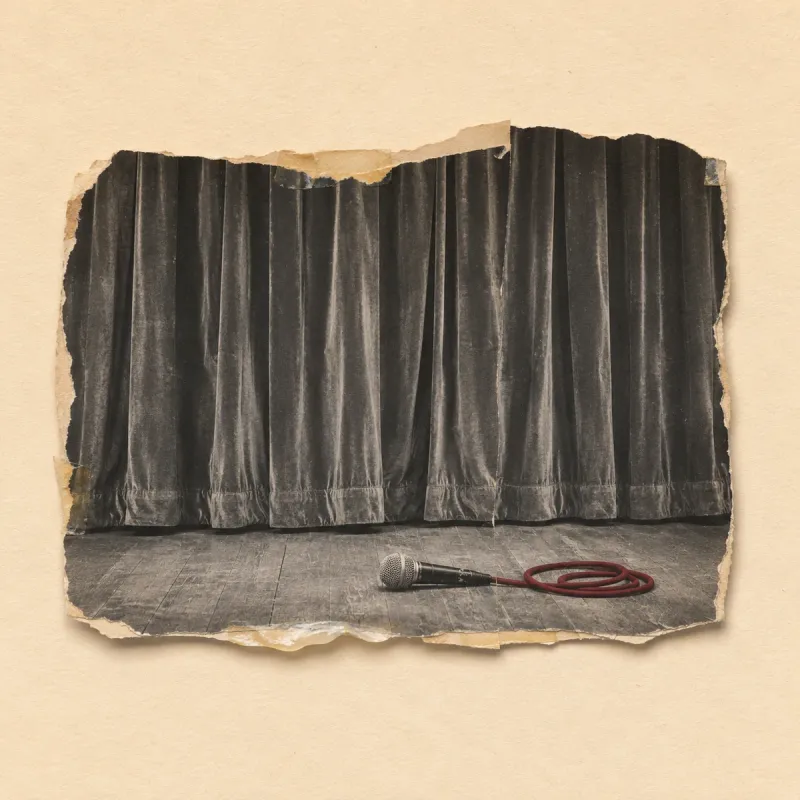
Turner’s life has been told again and again, in books, a feature film, a musical and a documentary. That she spoke publicly about violence mattered to many people. At the same time she said in later conversations how burdensome it could be to keep returning to that story.
This raises an uncomfortable question for all of us who admire her precisely because of that story. Is it also part of a woman’s self-determination that at some point she may refuse to explain her own suffering once more? Or do we expect the survivor to remain permanently on call as publicly accessible evidence for our idea of strength?
I think admiration can be a form of ownership claim too. We love her story so much that we want to hear it again and again, and don’t even notice that we are doing the same as everyone before us: disposing of something that belongs to her.
The Sun in the fourth and the Moon in the tenth house can be read once more from this angle. What is meaningful to an audience does not therefore have to be publicly available at all times. A person can have told a story without having entered into a lifelong duty to repeat it.
The right to choose a new horizon includes the right not to be taken back to the starting point of the journey all the time. It includes the right to privacy, to joy, to art without autobiographical justification and to a life whose meaning doesn’t come only from having overcome suffering.
Tina Turner’s later engagement with spirituality and her life outside the touring business widen our picture of an artist who doesn’t have to be pinned to a single public role. Her liberation would be described incompletely if we could see in it only a bigger stage. It can just as well consist of deciding for yourself when to leave the stage.
VIII The mirror You owe nobody a comeback
Maybe you admire Tina Turner because she turned a life situation into a second career that was bigger than her first. Maybe it is the energy with which she embodied her art, or the way she spoke about her spiritual practice.
But what do you grant yourself before it has turned into an impressive success story?
May you make a decision that costs money at first? May you stop doing something others consider a privilege? And may you keep an occupation, a name, a skill or a piece of your past without thereby continuing to legitimise the old order?
A woman can take something back without denying where it comes from. She can acknowledge a past without signing ownership of the future over to it, and she may choose a future that is not one bit more spectacular than the life before.
The deeper form of Sagittarius is not about conquering yet another bigger world. It lies in the possibility of not drawing the standards of your own life entirely from an order whose limits you recognised long ago.
We admire Tina Turner’s fire. We just shouldn’t demand that every woman first survive a blaze before we concede that this fire belongs to her.
Natascha
The chart in numbers
26 November 1939, 10:10 p.m. CST, Brownsville, Tennessee (rating AA). Tropical, Placidus.
- Sun 4°01 Sagittarius, 4th house
- Moon 7°14 Gemini, 10th house
- Mercury 7°40 Sagittarius, retrograde, 4th house
- Venus 24°59 Sagittarius, 5th house
- Mars 4°48 Pisces, 7th house
- Jupiter 28°53 Pisces, 8th house
- Saturn 25°16 Aries, retrograde, 9th house
- Uranus 19°23 Taurus, retrograde, 10th house
- Neptune 25°14 Virgo, 2nd house
- Pluto 2°48 Leo, retrograde, 12th house
- Ascendant 19°01 Leo, MC 12°24 Taurus
Differing coordinates (Nutbush or Brownsville) shift the axes. Brownsville is used consistently here. None of the configurations mentioned is a statement about the cause of violence.
Sources
- Bloomberg Law: Tina Turner’s Name Wasn’t Always Hers, But She Fought for It. news.bloomberglaw.com
- ABC News (2023): Tina Turner, last interviews. abc.net.au
- California Museum: Tina Turner. californiamuseum.org
- Rock & Roll Hall of Fame: Tina Turner. rockhall.com
- National Museum of African American History and Culture: Tina Turner. nmaahc.si.edu
- Stanford, Ho Center for Buddhist Studies: Tina Turner. buddhiststudies.stanford.edu
- Tricycle: Tina Turner, Buddhist. tricycle.org
- Vanity Fair (2020): Tina Turner, Happiness Becomes You. vanityfair.com
- Astro-Charts: Tina Turner. astro-charts.com
- Astro-Databank: birth data for 26 November. astro.com