Freedom Without Flight — The Freedom of Not Having to Flee
Maybe the greatest freedom is not being able to leave at any time. Maybe it is also being able to stay without losing yourself.
Contents
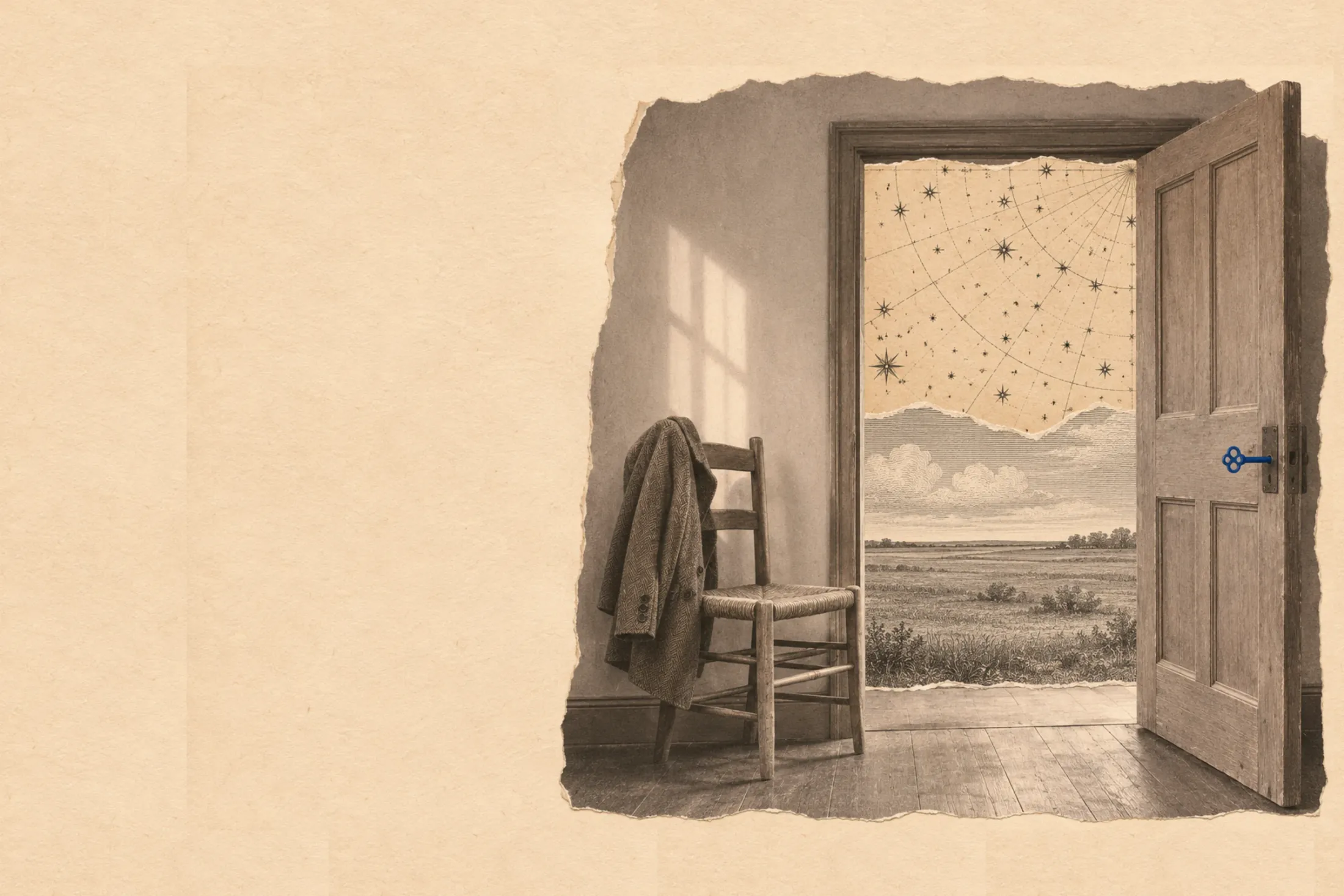
It is one thing to stay in a room whose door is locked. It is quite another to stay in a room whose door you could open yourself at any time.
From outside the two may look the same, because in both cases someone is sitting in a room. The difference lies in who has command of the door.
Our idea of freedom depends rather heavily on visible movement. A woman quits, leaves a relationship, moves to another city and starts over, and we recognise her self-determination by the shape of her life changing.
These decisions can mean an enormous amount. Especially when a person has to overcome real restrictions, the possibility of leaving is anything but a philosophical detail.
But what happens when visible change itself becomes the measure of whether someone is free? Then staying in a place, in a relationship or with a project you chose yourself suddenly looks like a defeat, even when the conditions of that staying changed long ago.
I think we have a bouncer in our heads who only waves through people leaving with a suitcase. Whoever stays seated has to show ID.
The Sagittarius foundation piece was about the map and its margins. This one is about the room you are already in. Because for me the integrated form of Sagittarius is not about taking away its freedom of movement. It is about no longer having to prove its freedom through movement all the time.
I The three forms of freedom
I find it helpful to keep three levels apart.
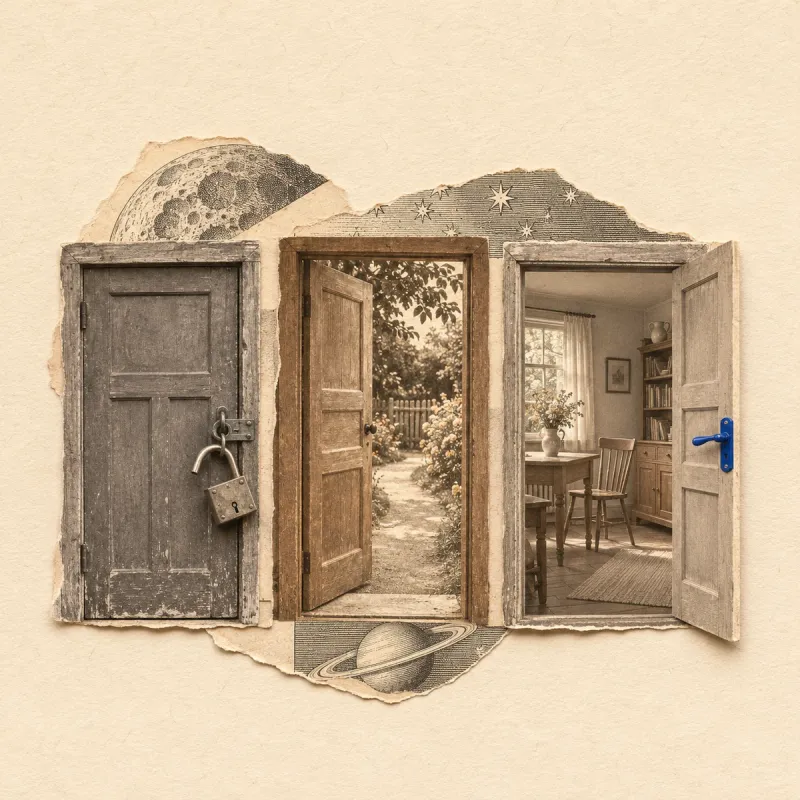
The first is freedom from an external restriction. No person, no institution and no material pressure determines in an illegitimate way which decisions are open to you at all.
The second is the freedom to act, and that depends on the resources, information and possibilities with which a decision can actually be carried out. A departure that is formally permitted is simply something other than a departure for which there is a flat, money or support.
The third is freedom within a chosen form. A person can take on a commitment, be in a relationship or work on a project for a long time and still have a say in the terms.
In the picture with the door that means: with the first freedom nobody locks you in. With the second you have somewhere outside to go. And with the third you may rearrange the furniture in the room, open the windows and have a say in who comes in.
The three can’t always be cleanly separated. A person can be legally free and still have no money. They can have many options and barely perceive some of them as allowed because of inherited expectations, and they can enter a voluntary commitment whose terms later change.
The Sagittarius archetype asks how these levels can be connected without one of them being declared the only measure of freedom.
Freedom is not simply the absence of all relationships. It is also the possibility of shaping your own relationship with the world.
II The commitment you chose yourself
We shouldn’t confuse the ability to commit with the ability to submit.
A commitment can match a value of your own. A person can do something over and over because they want to create something that doesn’t come into being in an afternoon. And they can take responsibility for others because that relationship is a part of their life they chose themselves.
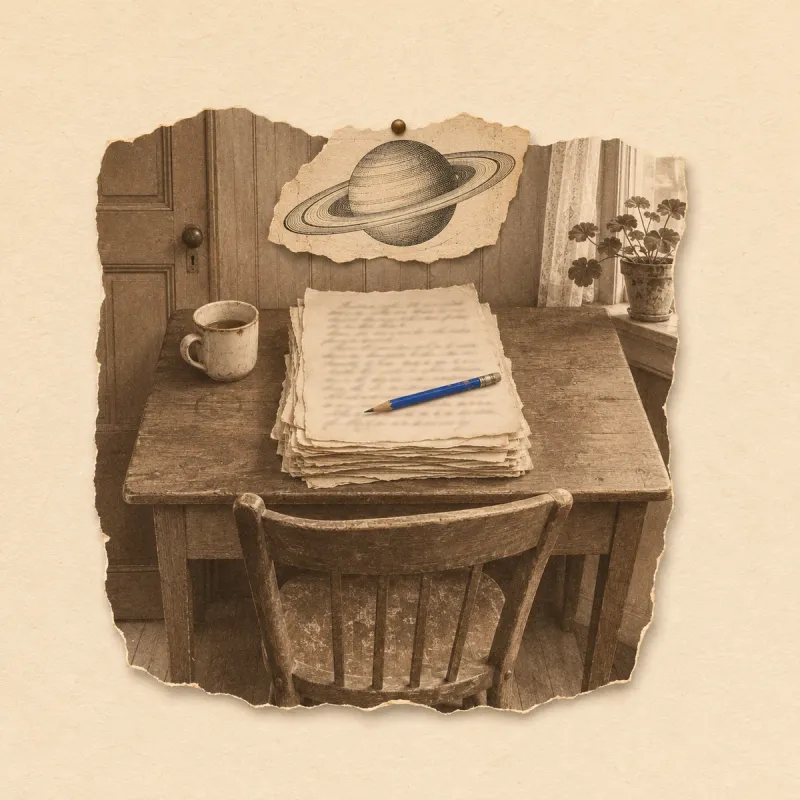
Astrologically, this is where Jupiter and Saturn meet. Jupiter opens a horizon, and Saturn builds the form in which something of that horizon can actually come into being.
A book doesn’t write itself by your imagining a book, after all. A relationship isn’t lived by imagining a relationship, and social change doesn’t happen merely through the conviction that the world ought to be different.
Jupiter is the view, and Saturn is the chair you stay sitting on long enough to actually paint it.
That doesn’t mean every form is useful or every limit just. It only means that the lack of any form can prevent a possibility just as much as a form that is too tight.
The integrated Sagittarius recognises which commitments serve its own horizon and which merely fix that horizon’s limits according to other people’s ideas.
Some limits are what give the possible a shape in the first place.
III The feminist trap of the permanently free woman
We live in a culture that on the one hand praises women for their adaptability. On the other hand it now offers them a new role that is just as demanding: the completely independent woman who never needs help, leaves every unsuitable situation at once and displays her freedom visibly at all times.
This figure is a norm too.
It used to be “stay, that’s what’s proper”, now it’s “go, that’s what’s proper”. The sentence structure has stayed the same, and in both cases someone else decides what a proper woman looks like.
A woman who needs support has no less dignity than one who carries out everything alone. And a woman who experiences a jointly shaped commitment as meaningful is not automatically less emancipated than one who chooses a different form of relationship.
Just as little may criticism of the ideal of the independent woman serve as a justification for keeping her in dependencies she wants out of.
The political question remains which possibilities actually exist. The feminist question is whether women may assess those possibilities themselves instead of having to fulfil a new, socially desired form of femininity.
It is not our job to convert all women to the same kind of freedom. Our job is to question the conditions under which only certain kinds of freedom are available at all.
IV The shadow of the eternal option
A person who wants to keep every possibility open paradoxically deprives themselves of exactly the experience that only arises from a chosen possibility.
Every decision also means that other possibilities are not lived in that moment. That is not always a loss for good. Sometimes it is simply the normal condition of a life that isn’t infinite.
But when every commitment feels like betraying a possibly bigger life, having many options eventually becomes more important than experiencing any one of them. Freedom is then measured by the number of exits still open.
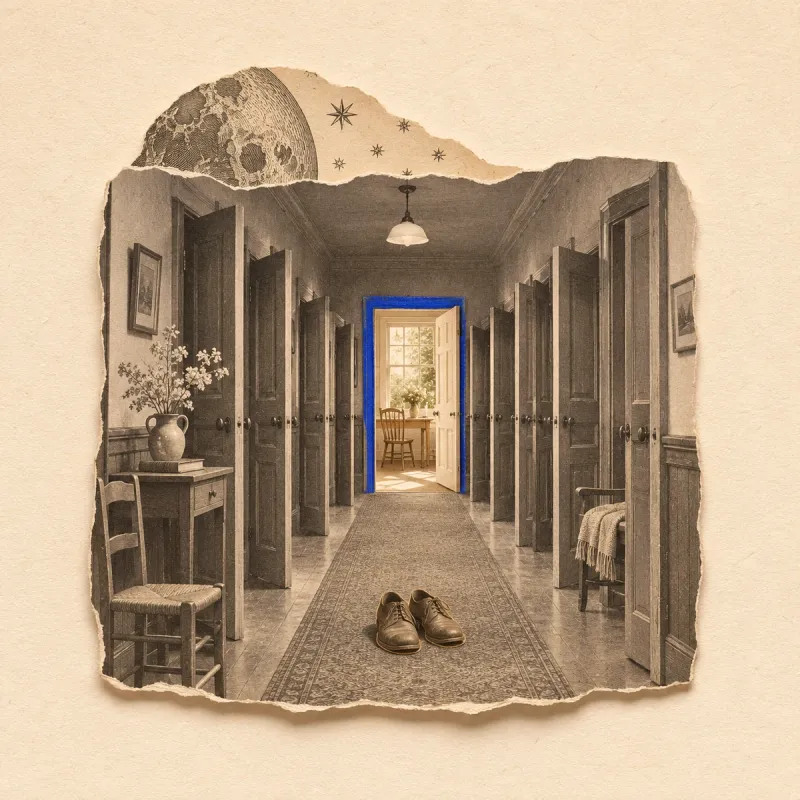
It’s the person standing in a corridor with twenty doors, holding all of them ajar and taking that for freedom. Honestly, they live in the corridor.
This is where the question of meaning helps. What is the freedom actually for? Which experience do you really want to have, and what would it be worth to you to give part of your time, your attention and your means to one thing over a longer period?
You don’t have to give an answer for life, and you may change it later.
Only a decision you truly made was not wrong merely because another horizon opens up later.
The freedom to decide also includes the freedom to live a decision for a while.
V The Reclamation
The old world may have handed down limits to you that you never chose. You may examine them.
You may leave when your safety or your self-determination is in danger. You may stay when the conditions truly match your values. And you may help shape an existing structure instead of having to choose between complete subordination and breaking off completely.
You may also change a belief without declaring the earlier version of yourself an enemy.
Maybe this is where the deeper difference between flight and freedom lies. Flight can be necessary when a place is truly dangerous or unbearable. But it can also become the only answer a person still knows when they want to protect their autonomy.
Flight knows a single movement, namely out. Freedom knows several.
It is not only the possibility of leaving a room. It can also be the possibility of changing its conditions, opening and closing its door yourself, inviting others in and keeping a horizon of your own while you do.
Sagittarius doesn’t have to stop looking for new worlds. It may simply discover that it can go on being free in a world it has already chosen.
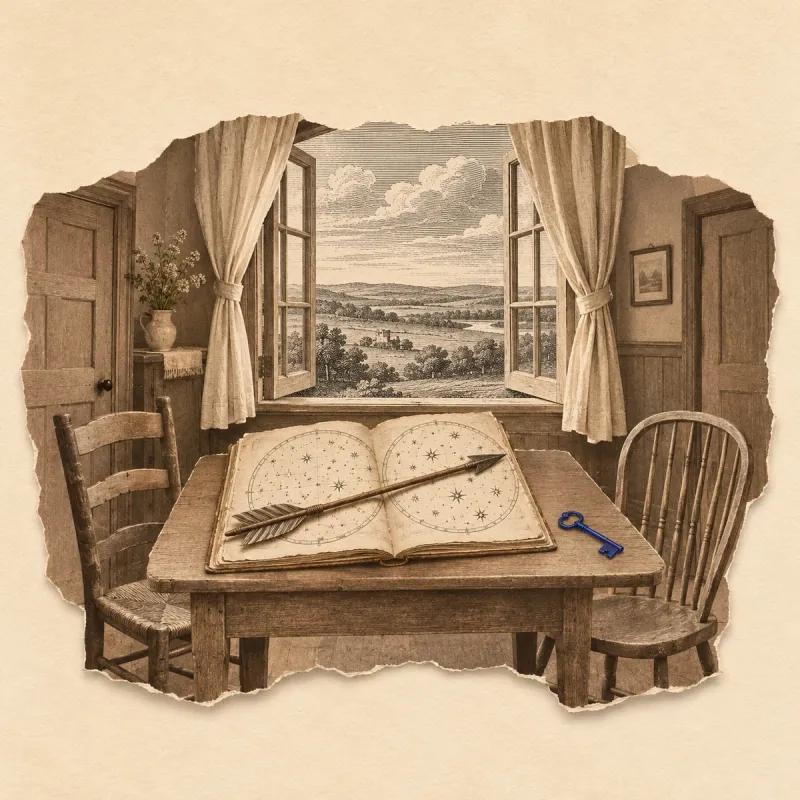
And sometimes the freest thing you can do on a given evening is to close the door from the inside, because you know the key is in your pocket.
I do not need to run from life in order to remain free within it.
Natascha